The Magic of “Why?”
If you’ve ever spent time with a toddler, you’ve likely heard the question “Why?” more times than you can count. “Why is the sky blue?” “Why do leaves fall?” “Why does the bubble pop?”
To a child, these aren’t just questions; they’re invitations to understand the world. At Playto, we see every “why” as the start of something extraordinary: a spark of curiosity that can grow into a love for learning.
Our classrooms are designed to turn those everyday wonders into meaningful discovery, helping young minds connect, explore, and build confidence through science that feels more like play than a lesson.
“Every question is a doorway to discovery — and every child is a scientist in the making.”
Why Early Science Learning Matters
SScience may seem like something children encounter later in school, but the foundation starts much earlier. In early childhood, “science” simply means observing, experimenting, and noticing how things work.
When toddlers pour water between cups, plant a seed, or watch the sun cast shadows, they’re developing key cognitive skills: curiosity, prediction, and reasoning. These experiences teach cause and effect, help build problem-solving abilities, and encourage the confidence to ask questions and test ideas.
Playto’s mission to nurture smarter, stronger, socially and intellectually prepared children is reflected in every activity that helps little learners explore their world with joy and purpose.
As DeepMind (Google’s AI research arm) CEO Demis Hassabis puts it, “Learning how to learn — how to pick up new material really quickly — will be the next generation’s most needed skill.”
Early science gives children that foundation: curiosity and adaptability in a world where knowledge evolves fast.
The Play-Based Science Approach at Playto
At Playto, we believe that the best science learning happens through play. Our classrooms combine structure with spontaneity, guiding children’s curiosity while leaving plenty of room for creativity.
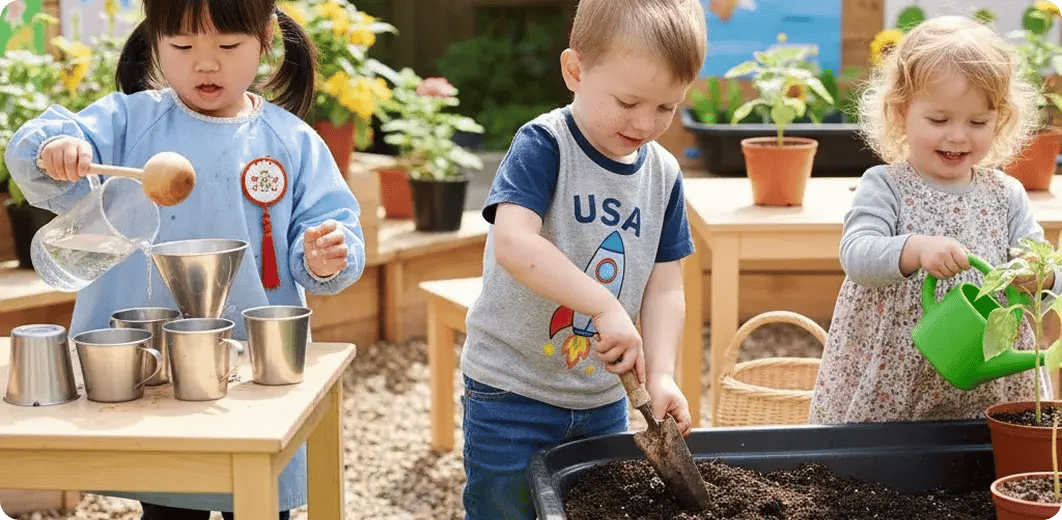
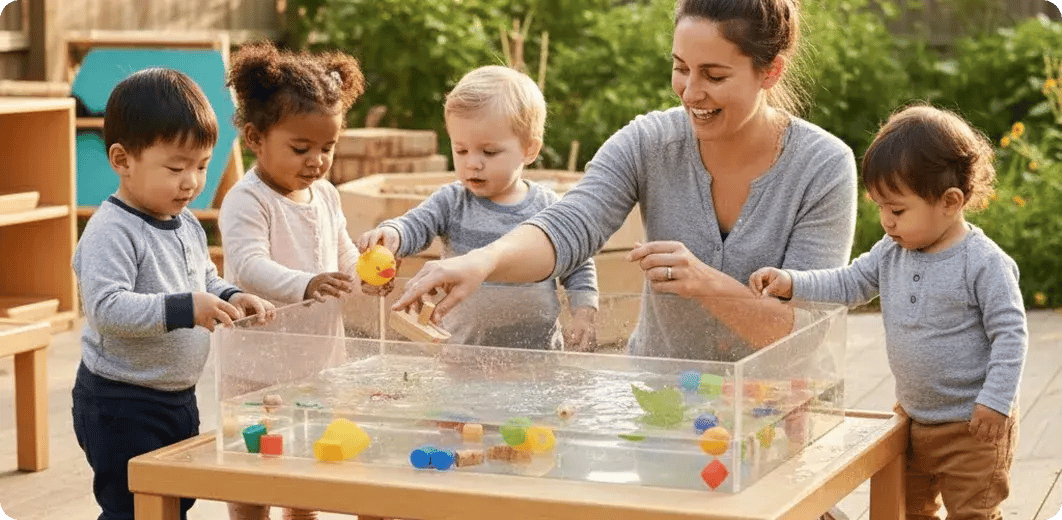
- Hands-on explorationFrom mixing colors during art time to watching what floats or sinks in the water table, our students are always experimenting. These experiences turn abstract concepts into tangible learning, and they’re a lot of fun.
- Outdoor discoveryIn the playground garden, children dig in the dirt, find worms, and observe how plants grow. These natural encounters foster care for living things and early environmental awareness.
- Teacher-guided curiosityOur educators ask open-ended questions like “What do you notice?” and “What do you think will happen next?” helping toddlers learn to express ideas and think critically.
“At Playto, we don’t just teach answers — we nurture curiosity.”
This play-based science approach aligns with Playto’s value of Continuous Improvement and its commitment to creating a Professional yet Personal learning environment where discovery feels safe, supported, and exciting.
%20(1).webp?width=1062&height=520&name=Rectangle%2034624256%20(1)%20(1).webp)
Everyday Science in the Classroom
Scientific thinking doesn’t need a lab coat. It happens naturally in everyday daycare moments.
Here are just a few ways Playto makes science part of daily life:
- Water play:Pouring, scooping, and floating experiments introduce basic physics and measurement.
- Shadow play:Exploring light and perspective by tracing shapes on sunny days.
- Color mixing:Discovering how red and blue make purple, or how paint behaves when blended.
- Weather observation:Tracking rain, wind, and sunshine helps children connect with the world around them.
- Cooking activities:Measuring, mixing, and watching ingredients transform teaches cause and effect (and patience!).
By engaging all five senses, children not only learn science concepts but also build rich vocabulary and self-expression. It’s discovery disguised as delight.
How Early Science Builds Confidence and Creativity
Science helps children do something profound. It teaches them how to think. When toddlers predict what will happen if they add too much water to the sandcastle, or when they test which objects roll fastest down a ramp, they’re learning to explore without fear of mistakes. Every experiment, whether it succeeds or fails, builds resilience and confidence.
At Playto, we celebrate the process as much as the result. Teachers emphasize that “getting it wrong” is often how we find what’s right. This philosophy reflects Playto’s nurturing and empowering culture.
“Confidence grows when children see themselves as capable problem-solvers, not just good students.”
Partnering with Parents to Keep Curiosity Alive
The spirit of discovery doesn’t end at pickup time. It continues at home. Playto partners closely with parents to extend curiosity beyond the classroom.
Families receive activity suggestions and insights from teachers so they can nurture science skills in everyday routines:
- Observe together:Look at the moon’s shape each night or count how many birds you see at the park.
- Play with prediction:Ask, “What do you think will happen if…?” during simple experiments or kitchen projects.
- Explore nature walks:Collect leaves, sticks, or stones, and talk about their textures and colors.
- Celebrate wonder:Show excitement when your child makes a new discovery — enthusiasm is contagious!

A Culture That Encourages Exploration
What makes Playto’s approach unique is its combination of professional curriculum and genuine warmth. Our teachers are not just observers; they’re collaborators in each child’s journey of discovery.
By creating a nurturing space where questions are encouraged, Playto helps children build not only knowledge but also a lifelong love of learning. It’s the perfect balance of structured excellence and personal attention.
Conclusion: Every Child Is a Scientist in the Making
Science in early childhood isn’t about memorizing facts. It’s about developing curiosity, creativity, and the confidence to explore.
At Playto, we see science everywhere: in the bubbles floating through the playground, the shadows dancing across the floor, and the little “whys” that fill our classrooms.
Early science learning is that first investment. It teaches children not just what to think, but how to keep learning — preparing them for a world where discovery never stops.
Leave a Reply